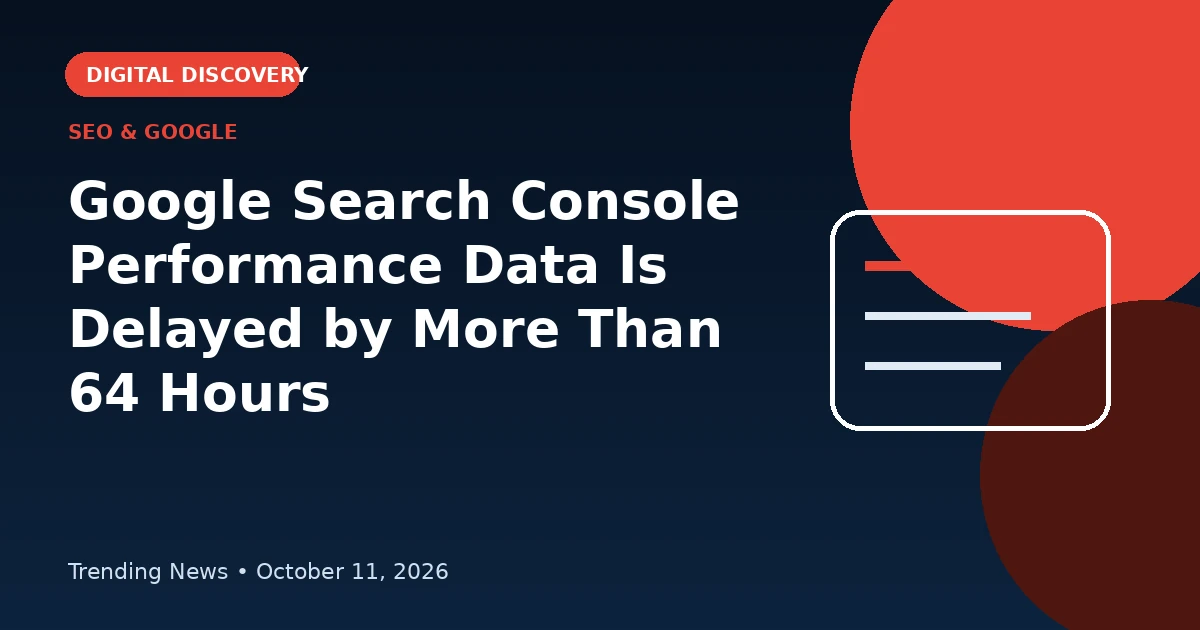

Google Search Console’s Performance report is experiencing an unusually long data delay, with the lag reported at more than 64 hours on October 11, 2026. The delay affects the reporting interface SEOs use to monitor clicks, impressions, CTR and average positions.
This is a reporting problem, not evidence by itself that a website has lost rankings or traffic. If your Search Console charts appear frozen, avoid making major SEO changes based only on missing recent data.
How unusual is the delay?
Search Engine Roundtable reported that the Performance report had fallen more than 64 hours behind, much longer than the typical lag site owners expect from this section of Search Console. The publication also noted that Google had not publicly commented on the delay at the time of its report.
Does the delay mean your rankings changed?
No. A Search Console reporting delay does not automatically indicate a ranking update, indexing problem or traffic loss. Search activity can continue while the reporting layer catches up later.
What site owners should do now
- Do not overreact to a flat Search Console chart.
- Record the affected dates.
- Check Analytics or other first-party data.
- Verify technical health separately.
- Avoid repeated indexing requests. Missing performance data is not fixed by resubmitting URLs.
How to rule out a real site problem
The SEO Website Analyzer can review important on-page signals, while the HTTP Headers Checker can confirm a page response and relevant headers.
You can also use the Sitemap Checker to verify that your XML sitemap is still accessible and contains priority URLs.
Is a new core update coming?
Some search marketers have speculated that a long reporting delay might be connected with another Google update. There is no official confirmation supporting that conclusion. It is safer to treat the lag as a reporting issue unless Google says otherwise or broader independent evidence appears.
Bottom line
When reporting falls unusually far behind, avoid impulsive changes, preserve a record of the missing period and rely temporarily on other first-party signals until Google’s data catches up.