
“Hi, I’m Roy, I’m 21. This Was Very Expensive. Pls Buy My Thing.” – The Boldest Billboard in Times Square
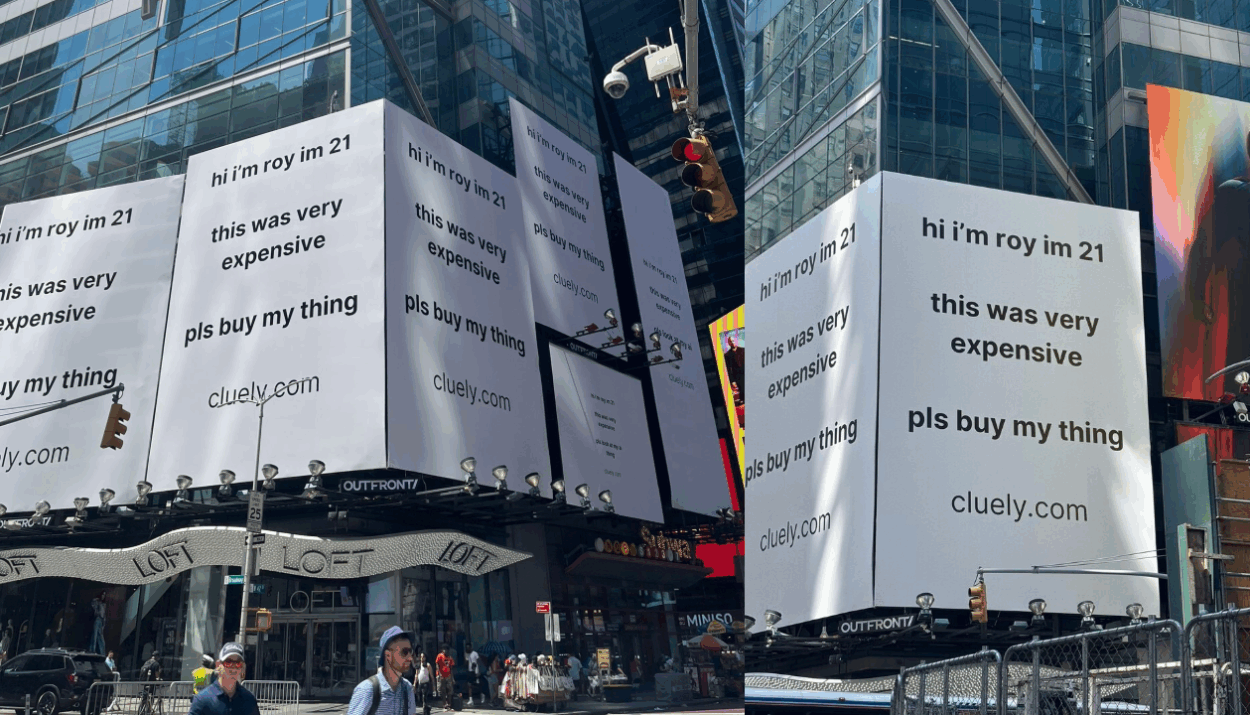
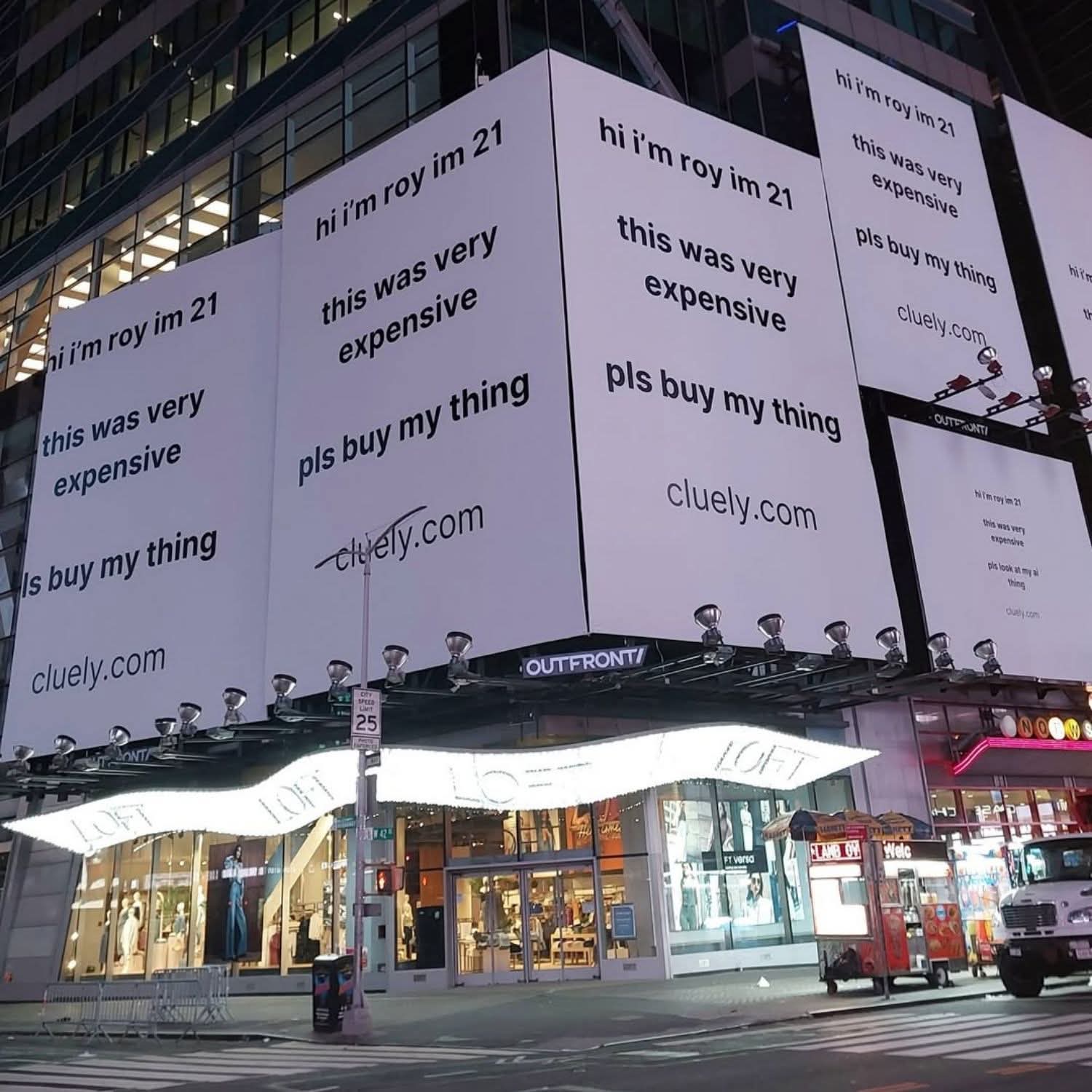
In the heart of Times Square, where global brands like Coca-Cola, Apple, and Netflix invest millions in dazzling advertisements, one simple billboard recently stole the spotlight. Instead of a polished slogan or a flashy design, the ad reads:
“hi i’m roy im 21
this was very expensive
pls buy my thing
cluely.com”

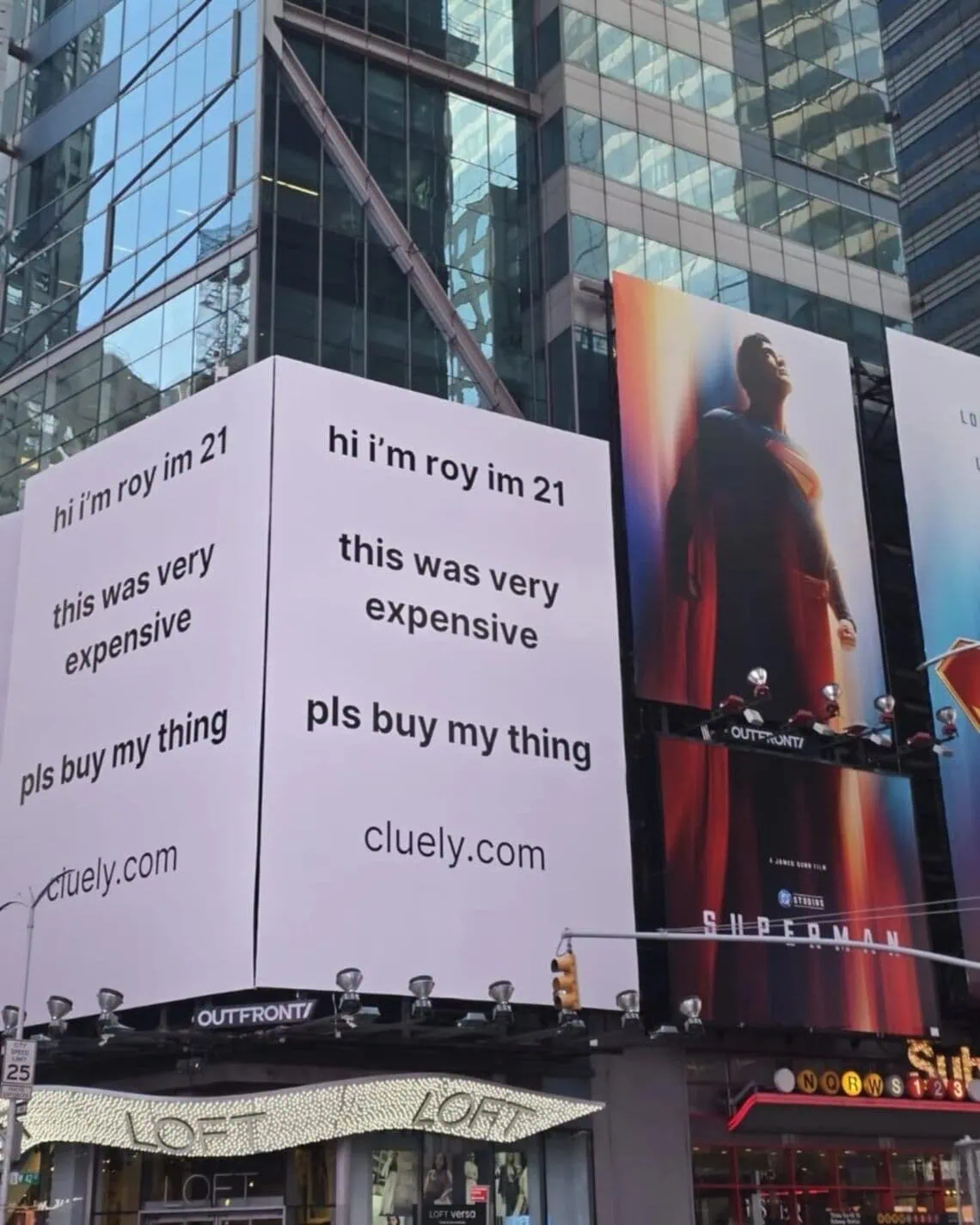
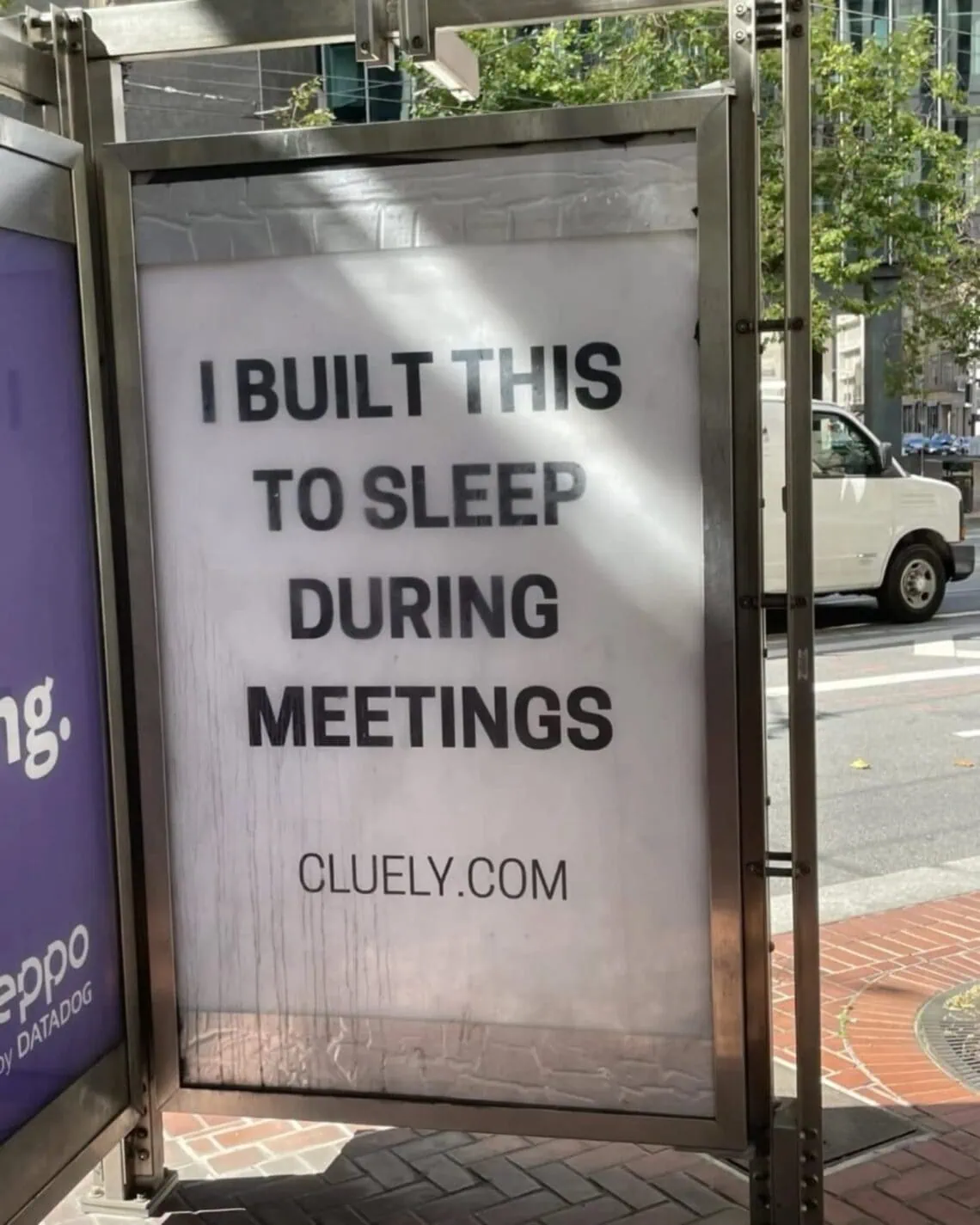

Minimalist, raw, and almost desperate, this billboard has sparked curiosity worldwide. Who is Roy? What is “his thing”? And why did he choose one of the most expensive advertising spaces on Earth to deliver such a blunt message?
The Power of Simplicity in Marketing
Most Times Square ads rely on motion graphics, celebrities, or cinematic visuals. Roy’s billboard, however, is pure text in black and white. By breaking every marketing rule, it managed to stand out among the noise.
This approach reflects the rise of “anti-marketing” strategies—campaigns that lean into honesty, humor, and relatability rather than over-polished branding. It’s a reminder that in 2025, authenticity sells.
The Viral Effect
Within hours, photos of Roy’s billboard went viral on social media. Twitter, TikTok, and Reddit users began sharing it, praising the bold move and wondering about the cost. A Times Square ad can run anywhere from $10,000 to over $100,000 per day, depending on size and duration. For a 21-year-old, that’s indeed “very expensive.”
The curiosity-driven buzz likely brought massive traffic to cluely.com, proving that unconventional advertising can yield big returns when amplified by virality.

Why It Works
- Relatability – Everyone understands the struggle of being young and broke, trying to make something work.
- Curiosity – The vagueness of “pls buy my thing” drives people to search and click.
- Honesty – In a world full of manipulative ads, blunt honesty feels refreshing.
- Virality – The humor and simplicity make it highly shareable.
Lessons for Marketers
Roy’s billboard is more than a stunt—it’s a case study in disruptive marketing. Sometimes, being direct and human resonates more than flashy campaigns. The ad proves that creativity isn’t about budget size, but about daring to be different.
As digital marketing becomes increasingly competitive, authenticity and bold experimentation may be the ultimate ways to break through.
What do you think—was this a genius move or a reckless gamble?